Master Brand Delivery: Practical Guide
In today’s fast-paced digital landscape, the final delivery of brand assets isn’t just a checkbox; it’s a critical moment that can significantly impac…

Table of contents
- The Unseen Friction: Why Clunky Brand Handoffs Hamper Growth
- The Cost of Disorganized Assets: Time, Money, and Client Trust
- Common Scenarios: From ‘Where’s the Latest Logo?’ to ‘What’s the Hex Code?’
- The Promise of Streamlined Delivery: What’s In It for You?
- Defining Your Brand’s DNA: Essential Assets for Seamless Delivery
- Core Visual Identity: Logos (various formats), Color Palettes (HEX, RGB, CMYK)
- Typography: Fonts, Usage Guidelines, and Licensing
- Imagery & Visuals: Photography styles, Illustrations, Iconography
- Supporting Materials: Brand voice, Tone of voice documentation
- Structuring Your Brand Hub: The Power of Centralized Asset Management
- Categorization Strategies: Organizing by Asset Type and Usage
- Version Control Essentials: Ensuring Clients Always Access the Latest Files
- Naming Conventions That Make Sense: Eliminating Ambiguity
- Crafting the ‘One Link’ Experience: Your Client’s Gateway to Brand Assets
- The Anatomy of a Perfect Brand Link: What to Include
- User Experience Design for Handoff: Intuitive Navigation is Key
- Customization Options: Reflecting Your Agency’s Brand
- Beyond the Files: Essential Documentation for Client Empowerment
- Creating Clear Brand Guidelines: The ‘Why’ Behind Your Design Decisions
- Usage Examples: Demonstrating Best Practices in Action
- Troubleshooting Common Client Queries: Proactive Support
- Optimizing Your Brand Delivery Workflow: From Project End to Handoff
- Pre-Handoff Checklist: Ensuring Everything is Ready
- Integrating Asset Management into Your Design Process
- Setting Client Expectations: Clear Communication is Crucial
- The Agency Advantage: Scaling Your Brand Delivery Processes
- Onboarding New Team Members: Standardizing Handoff Procedures
- Client Onboarding for Repeat Business: Setting the Stage for Future Success
- Measuring Handoff Efficiency: Identifying Bottlenecks
- Freelancer’s Edge: Delivering Professionalism with Every Project
- Building Client Trust Through Organized Deliverables
- Time-Saving Strategies: Reclaim Hours for Creative Work
- Standing Out in a Crowded Market: The Impact of a Seamless Handoff
- Designing for the Future: Evolving Brand Assets and Delivery Methods
- Troubleshooting Common Brand Handoff Pitfalls
In today’s fast-paced digital landscape, the final delivery of brand assets isn’t just a checkbox; it’s a critical moment that can significantly impact client relationships and future project success. A disorganized or unprofessional handoff can sow seeds of doubt, while a seamless, structured experience reinforces your expertise and builds lasting trust.
Mastering brand delivery goes beyond simply sending a folder of files. It’s about presenting a comprehensive, organized, and easily accessible collection that empowers your clients to use your work effectively. This guide will walk you through the essential steps to transform your brand handoff from a potential pain point into a powerful demonstration of your professionalism and value.
The Unseen Friction: Why Clunky Brand Handoffs Hamper Growth
The repercussions of a disorganized brand asset delivery are more profound than many realize. What might seem like a minor inconvenience to the designer or agency can lead to significant downstream problems for the client, ultimately reflecting poorly on the initial creative work. This friction doesn’t just cost time; it erodes confidence and can stifle the very growth the brand aims to achieve. When clients struggle to find or correctly use brand elements, they encounter delays, potentially make costly mistakes, and may even question the professionalism of the creative team. This can lead to a reluctance to engage for future projects, creating a bottleneck in your own business development.
Consider the practical impact: a client needs a specific logo variation for a social media post but can’t find it, settling for a lower-resolution version that appears pixelated. Or perhaps they misinterpret a color code, leading to printed materials that don’t align with the brand’s intended palette. These aren’t isolated incidents; they are common symptoms of a breakdown in the asset delivery process. The effort involved in repeated requests for clarification or corrections diverts valuable resources, both for the client and potentially for your agency if you’re drawn back into resolving these issues. Effectively, a clunky handoff acts as an unseen friction, slowing down the client’s momentum and damaging your reputation for organized, efficient service.
The Cost of Disorganized Assets: Time, Money, and Client Trust
The tangible costs of disorganized brand assets are substantial and multi-faceted. For your clients, hunting through sprawling folders or deciphering vague file names translates directly into wasted hours. This time could otherwise be spent on marketing initiatives, product development, or core business operations. Furthermore, the risk of using incorrect assets—a pixelated logo, the wrong font, or an outdated color—can lead to costly reprints, re-marketing campaigns, or even damage to brand reputation. Imagine a large-scale print run for signage featuring an incorrect shade of blue; the financial outlay to fix this mistake would be astronomical. This financial drain is compounded by the emotional cost of frustration and the erosion of trust. When clients perceive a lack of organization, they may begin to doubt the meticulousness of the creative process itself, even if the initial design work was exceptional.
For agencies, the fallout includes the indirect cost of client support. If clients frequently ask for assets, clarifications on usage, or corrections due to unclear delivery, your team’s time is diverted from billable work. This can also lead to a perception of unreliability, even if the underlying issue is simply poor asset management. Building trust is paramount in any client-agency relationship, and a chaotic brand handoff is a direct assault on that trust. A client who feels unsupported or confused by the delivery process is far less likely to provide a glowing testimonial, refer new business, or continue the relationship. Thus, the investment in a structured and professional asset delivery system is not just about efficiency; it’s a crucial component of client retention and long-term business health. To learn more about the foundational elements of effective delivery, explore resources on pro brand assets.
Common Scenarios: From ‘Where’s the Latest Logo?’ to ‘What’s the Hex Code?’
The daily reality for many creative professionals involves fielding a consistent stream of questions stemming from disorganized brand asset delivery. The classic refrain, “Where’s the latest logo?” is a prime example. Clients may have multiple versions saved—print, web, favicon, black and white, reversed—and struggle to identify the most current or appropriate one for their immediate need. This often leads to them using an outdated or incorrect variant, undermining brand consistency. Equally common is the query about specific brand elements: “What’s the hex code?” or “Can you send me the RGB values for the primary color?” Without clear documentation or easy access, clients are left guessing or digging through previous emails, increasing the chance of color inaccuracy across digital platforms.
Beyond logos and colors, other frequent pain points include font specifications. Clients might ask, “Which font is for headings and which is for body text?” or more critically, “Do we have the correct licenses for these fonts?” Mismanagement here can lead to legal issues. Similarly, requests for specific imagery styles (“Can you send us the approved photography that shows diverse people?”) or icon sets can become time-consuming if not pre-organized. Even seemingly simple items like brand voice documentation can become problematic if clients aren’t sure how to apply it, leading to inconsistent messaging. These recurring questions highlight a fundamental gap: the absence of a centralized, easily navigable source of truth for all brand assets. Addressing these common scenarios proactively through a structured delivery process can save immense time and prevent significant brand erosion.
The Promise of Streamlined Delivery: What’s In It for You?
The benefits of a streamlined brand asset delivery process extend far beyond mere convenience; they represent a strategic advantage for any agency or designer. At its core, it’s about boosting efficiency and profitability. When clients can intuitively access the exact assets they need, the number of repetitive questions and support requests plummets. This frees up your team to focus on high-value, billable work rather than acting as a perpetual asset librarian. Imagine reclaiming hours each week previously spent searching for files or explaining usage guidelines. This reclaimed time directly translates into increased capacity and improved revenue potential. For agencies looking to scale, this operational efficiency is not just desirable; it’s essential for sustainable growth.
Moreover, a professional and polished brand handoff significantly enhances client satisfaction and retention. A well-organized delivery system communicates competence, attention to detail, and a commitment to client success. It assures clients that they are receiving a complete, high-quality package that empowers them to implement the brand effectively. This positive experience fosters trust, encourages repeat business, and can lead to valuable referrals. Clients who feel supported and impressed by your delivery process are more likely to become long-term partners. Furthermore, a streamlined system can serve as a powerful differentiator in a competitive market. Offering a superior client experience from start to finish, including the final asset delivery, sets you apart and solidifies your reputation as a top-tier creative partner. Explore how to boost agency efficiency through better asset delivery practices.
Defining Your Brand’s DNA: Essential Assets for Seamless Delivery
To achieve a truly seamless brand delivery, the first crucial step is to meticulously define and organize what constitutes your brand’s core identity. This “DNA” encompasses all the foundational elements that make a brand recognizable and consistent. Without a clear understanding and collection of these essential assets, any attempt at a professional handoff will inevitably fall short. Think of these as the building blocks of your brand’s visual and verbal communication. They are the fundamental components that, when applied correctly, create a cohesive and impactful brand presence across all touchpoints. Ensuring each of these elements is properly prepared, documented, and readily available is paramount to preventing confusion and ensuring brand integrity for your clients.
The process begins with identifying what truly matters. What are the non-negotiables that define your brand’s appearance, feel, and voice? This involves a deep dive into the brand strategy, the target audience, and the desired market perception. By cataloging each essential asset, you create a comprehensive inventory that serves as the bedrock for your entire delivery system. This proactive approach to defining your brand’s DNA not only streamlines the handoff process but also serves as a constant reference point for your own team, ensuring ongoing consistency in your work. It’s an investment in clarity and control that pays dividends throughout the client relationship and beyond.
Core Visual Identity: Logos (various formats), Color Palettes (HEX, RGB, CMYK)
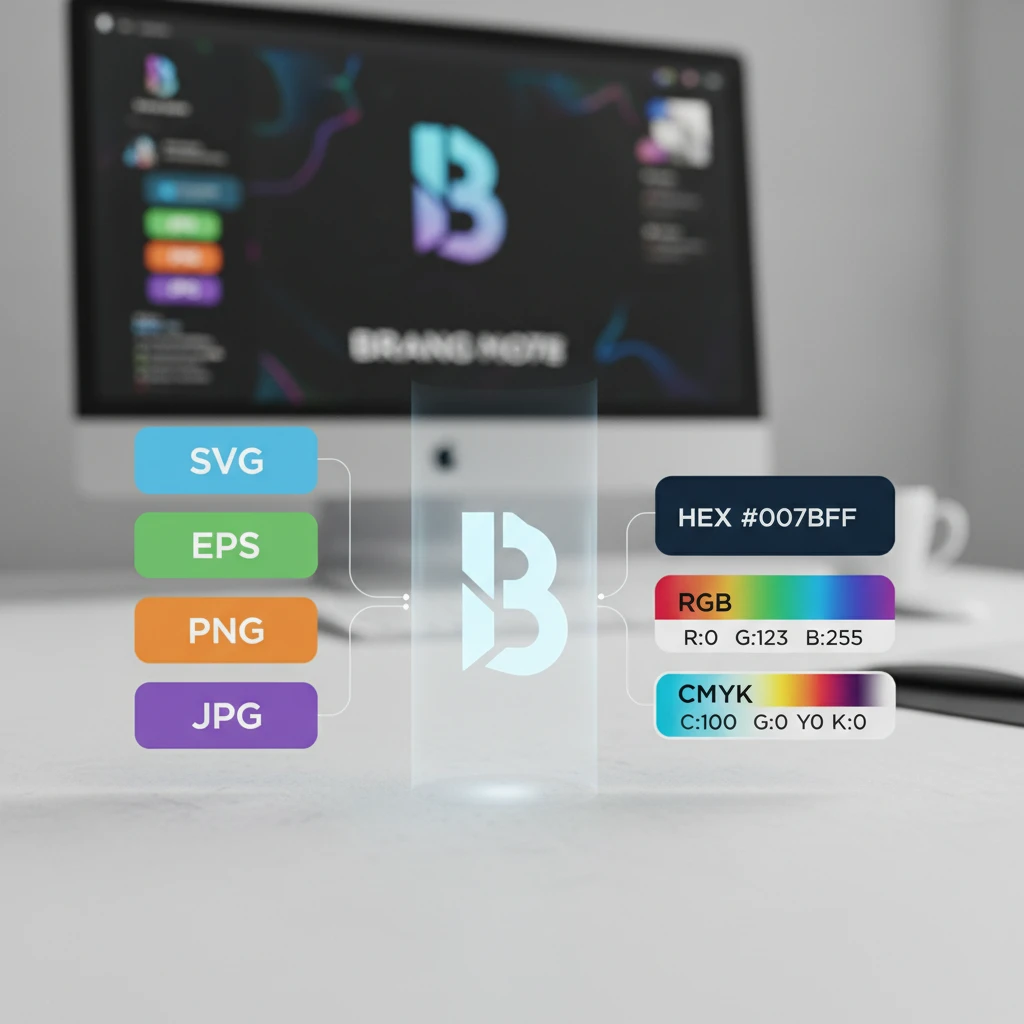
The cornerstone of any brand’s visual identity is its logo. For effective delivery, it’s imperative to provide the logo in multiple formats to cater to diverse application needs. This includes high-resolution vector formats like AI, EPS, and SVG, which are scalable without loss of quality and are ideal for print and large-scale applications. For web and digital use, provide transparent PNG files in various sizes, along with JPGs for situations where transparency isn’t required. Include different logo lockups: primary logo, secondary logos, and mark-only versions. Crucially, ensure there’s a clear distinction between full-color, one-color (black and white), and reversed versions to accommodate different backgrounds. Alongside the logo, a comprehensive color palette is vital. This should be meticulously documented with exact values for HEX, RGB, and CMYK to ensure color accuracy across all mediums—from screen displays to print. Providing these core visual elements in an organized and accessible manner is the first step in empowering clients with a consistent brand presentation.
When presenting these assets, clarity is key. For instance, group logos by type (e.g., “Primary Logo,” “Icon Mark”) and then by format within each group (e.g., “Full Color PNG,” “Black EPS”). Similarly, list color palettes with clear labels like “Primary,” “Secondary,” and “Accent,” alongside their corresponding HEX, RGB, and CMYK values. This structured approach prevents clients from having to guess which file is appropriate or what color value to use. The goal is to eliminate ambiguity and provide a definitive source of truth for the brand’s visual foundation. This meticulous attention to detail in delivering your core visual identity not only serves the client but also reinforces your agency’s professionalism and commitment to brand integrity, preventing common pitfalls like color drift or logo distortion. Explore how detailed documentation of brand assets simplifies client delivery.
Typography: Fonts, Usage Guidelines, and Licensing
Typography is more than just choosing pretty letters; it’s a critical element that dictates readability, tone, and brand personality. For a complete brand delivery, providing the correct fonts is non-negotiable. This includes the actual font files themselves, typically in formats like TTF (TrueType Font) and OTF (OpenType Font), and ideally WOFF/WOFF2 for web use. However, simply handing over files is insufficient. Clients need clear usage guidelines. This means specifying which fonts are designated for headings, body text, captions, and any other specific applications. Documenting font weights and styles (e.g., “Bold for main headings,” “Regular for body copy”) is equally important to ensure consistent hierarchy and visual flow. Without this guidance, clients might arbitrarily choose font variations, leading to a disjointed and unprofessional appearance.
Beyond the practical application, the often-overlooked aspect of licensing is critical. Clients must understand the terms under which they are permitted to use the provided fonts. If your agency has purchased licenses, clearly communicate what these licenses cover (e.g., number of users, types of media). If clients need to purchase their own licenses, provide direct links to reputable foundries or resources where they can do so legally. Failing to address licensing can expose clients to significant legal risks and penalties. Providing this comprehensive typographic package—files, clear usage rules, and licensing information—ensures that your clients can implement typography correctly and confidently, maintaining the intended aesthetic and avoiding legal entanglements. This level of detail elevates your brand delivery from a simple file dump to a valuable resource.
Imagery & Visuals: Photography styles, Illustrations, Iconography
A brand’s visual narrative is significantly shaped by its imagery, illustrations, and iconography. Therefore, a robust brand delivery must include these elements in a well-organized manner. For photography, provide a library of approved images that adhere to a defined style guide. This guide should articulate the desired mood, subject matter, composition, and lighting. Include high-resolution versions suitable for print and web, and consider categorizing them by theme or use case (e.g., “Team Photos,” “Product Shots,” “Lifestyle Images”). Similarly, if your brand utilizes custom illustrations, provide them in editable vector formats (AI, EPS, SVG) as well as flattened PNGs. Ensure consistency in style, line weight, and color usage across all illustrations. The same principles apply to iconography; supply a complete set of icons in various formats (SVG, PNG) and sizes, along with clear guidelines on their intended use and spacing to maintain visual harmony.
The key here is not just providing the assets, but providing them in a way that guides their application. For instance, a client might not know whether to use a specific illustration for a website banner or a social media graphic. Providing context or categorizing assets by suggested use can prevent misuse. Furthermore, ensure that all visual assets are optimized for their intended platforms—high-resolution for print, web-optimized for digital—to avoid performance issues or poor quality. A comprehensive collection of visuals, coupled with clear direction on their appropriate use, empowers clients to build a consistent and compelling visual story that aligns perfectly with the brand’s established identity. This attention to detail in visual asset delivery reinforces the brand’s professional image and aids in its consistent application across all communication channels. For a deeper understanding of how structured content aids this process, consider resources on design systems and asset delivery hubs.
Supporting Materials: Brand voice, Tone of voice documentation
Beyond the purely visual, the linguistic and communicative aspects of a brand are equally critical and must be included in a comprehensive delivery. This includes detailed documentation of the brand’s voice and tone. The brand voice is the consistent personality and style of communication, while the tone refers to the variations in that voice depending on the context or audience. Your documentation should clearly define these, providing examples of what the voice is and, importantly, what it is not. For instance, is the brand voice authoritative or conversational? Playful or serious? Helpful or aspirational? Clearly articulating these characteristics with illustrative examples helps clients craft messaging that truly resonates with the brand’s identity.
This documentation might also encompass a glossary of approved terminology, common phrases to use or avoid, and guidelines for storytelling or customer interaction. The goal is to provide a clear framework that enables anyone communicating on behalf of the brand to do so authentically and consistently. Think of it as a guide to speaking and writing as the brand. When clients receive this level of detail, they are far better equipped to develop marketing copy, social media updates, website content, and customer service responses that are not only clear but also perfectly aligned with the brand’s personality. This meticulous approach to supporting materials ensures that the brand’s message is as strong and consistent as its visual identity, reinforcing its overall impact and recognition. Effectively managing these elements contributes significantly to overcoming client confusion in brand asset delivery.
Structuring Your Brand Hub: The Power of Centralized Asset Management
The most effective method for managing and delivering brand assets is through a centralized hub. This isn’t just about having a single location for files; it’s about creating a structured, intuitive system that ensures easy access and prevents chaos. A well-organized brand hub acts as the definitive source of truth for all brand elements, from logos and colors to fonts and imagery. This centralization drastically reduces the time clients (and internal teams) spend searching for assets, minimizing frustration and the risk of using outdated or incorrect files. By consolidating everything in one accessible place, you streamline workflows and significantly enhance the professional perception of your service. It transforms what could be a cumbersome task into a smooth, efficient process.
The power of this approach lies in its ability to foster consistency and control. When all brand assets are managed centrally, it becomes much easier to maintain brand integrity across all applications. Any updates or new assets can be implemented in one place, ensuring that everyone is always working with the latest versions. This eliminates the common problem of conflicting file versions floating around different devices or email chains. Ultimately, a structured brand hub is an investment in clarity, efficiency, and the long-term health of the brand you are helping to build. It’s the foundation for a professional and seamless client experience that sets you apart.
Categorization Strategies: Organizing by Asset Type and Usage
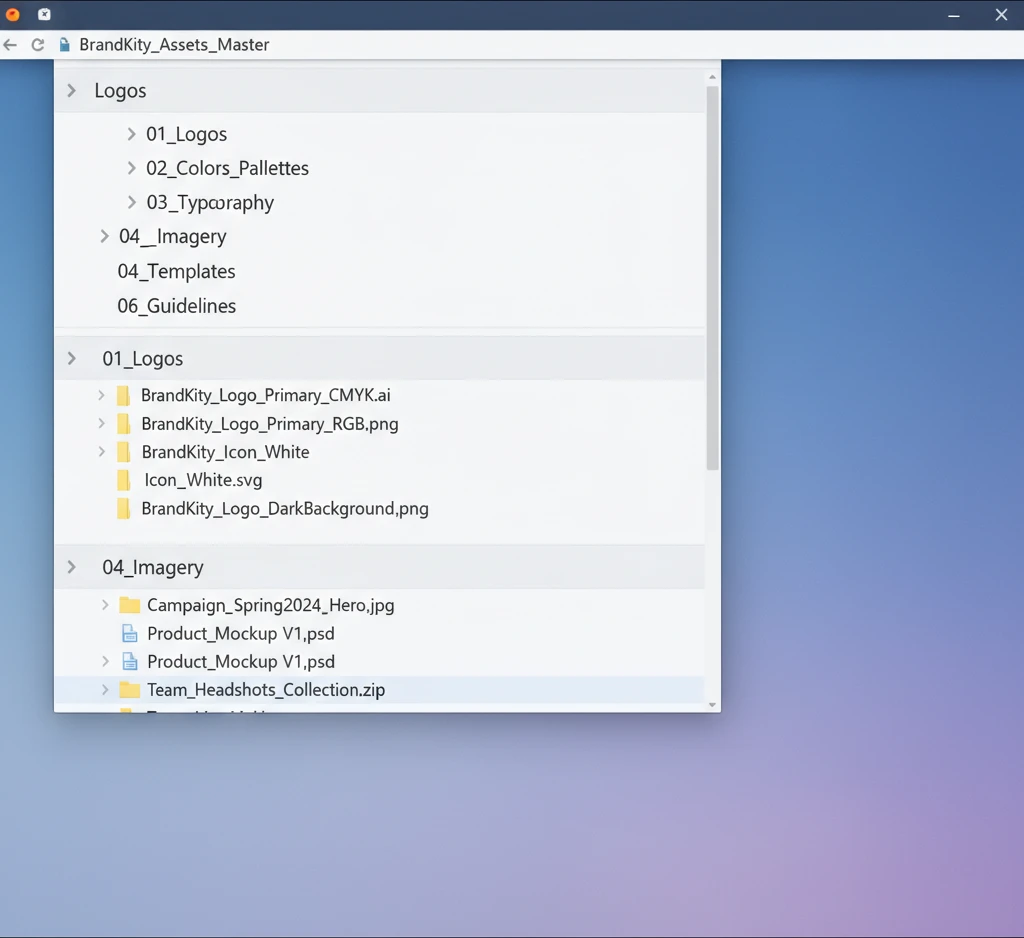
Effective categorization is the backbone of a functional brand hub. The most intuitive approach is to organize assets primarily by asset type. This means creating distinct folders or categories for Logos, Color Palettes, Typography, Imagery, Icons, Documents, and so on. Within these broad categories, further sub-categorization can enhance clarity. For logos, for instance, you might have subfolders for “Primary,” “Secondary,” “Monochrome,” and “Mark Only.” For typography, separate folders for “Heading Fonts” and “Body Fonts” can be beneficial. Beyond type, consider organizing by usage scenarios. This can be particularly helpful for complex brands or those with diverse applications. For example, you might have categories like “Web & Digital,” “Print,” “Social Media,” or “Presentations.” This allows clients to quickly navigate to the section most relevant to their immediate task, rather than sifting through a general list.
Another effective strategy is to group assets based on their primary function or project association if applicable. For example, if you’ve developed a comprehensive brand system for a client, you might have a primary category for “Brand System Assets” with sub-folders as described above. The key is to adopt a logical, hierarchical structure that mirrors how a user would naturally think about and search for specific assets. Avoid overly deep nesting, which can become cumbersome. Aim for a balance between comprehensive organization and ease of navigation. Regularly reviewing and refining these categories based on user feedback or evolving brand needs ensures the hub remains a practical and indispensable tool. This structured approach is fundamental to providing a truly seamless client handoff experience.
Version Control Essentials: Ensuring Clients Always Access the Latest Files
In the dynamic world of brand development, ensuring clients always have access to the latest approved versions of assets is paramount. This is where robust version control becomes indispensable. Without it, clients might inadvertently use outdated logos, incorrect color codes, or superseded font files, leading to inconsistencies and brand dilution. The core principle is to establish a clear system for managing revisions and updates. This can be achieved through several methods: a consistent naming convention that includes version numbers (e.g., `logo_primary_v2.1.svg`), utilizing the built-in versioning features of cloud storage platforms, or employing dedicated brand asset management software that automates this process. The goal is to make it immediately obvious which file is the most current and authoritative.
When updating an asset, it’s crucial to archive previous versions rather than simply deleting them. This preserves a history of the brand’s evolution and provides a fallback if needed, but it also ensures that older, potentially problematic files are clearly separated from the current ones. Informing clients about significant updates, perhaps through a changelog or notification system within your brand hub, further reinforces the integrity of the delivery. The message is clear: when a client accesses the brand hub, they can trust that they are obtaining the most accurate and up-to-date materials available. This builds confidence and reinforces your agency’s commitment to maintaining brand standards meticulously. Implementing effective version control is a key component of a professional brand delivery process.
Naming Conventions That Make Sense: Eliminating Ambiguity
Ambiguity in file names is a frequent source of frustration and error in brand asset delivery. Establishing clear, consistent, and logical naming conventions is therefore a critical step in creating a user-friendly brand hub. A good convention should be descriptive enough to identify the asset without needing to open it, yet concise enough to be manageable. It typically includes key information such as the brand name, asset type, format, and version number. For example, instead of a generic name like `logo.png`, a more effective name would be `BrandKity_Logo_Primary_FullColor_RGB_2024.png`. This level of detail immediately tells the user what the file represents.
When developing these conventions, consider a few key principles. Use underscores (`_`) or hyphens (`-`) to separate elements, avoiding spaces which can cause issues in some digital contexts. Be consistent with capitalization—either all lowercase, all uppercase, or a standard title case. Include dates where relevant, especially for logos or assets that might be updated annually. For font files, include the font family name and style (e.g., `OpenSans_Bold.ttf`). Implementing these simple yet powerful naming rules eliminates guesswork, reduces the likelihood of clients selecting the wrong file, and significantly speeds up the process of finding specific assets. It’s a small detail that contributes enormously to the overall professionalism and usability of your brand asset delivery system, directly addressing the problem of asset chaos.
Crafting the ‘One Link’ Experience: Your Client’s Gateway to Brand Assets
The ultimate goal of a well-structured brand hub is to consolidate all necessary assets into a single, easily shareable link. This “one link” experience revolutionizes brand delivery by providing clients with a dedicated, professional portal to access everything they need. Instead of navigating through cluttered email threads, shared drives with ambiguous folder structures, or multiple download links, clients receive a single URL that acts as their complete brand resource. This approach not only simplifies the handoff process for you but also dramatically enhances the client’s experience, projecting an image of organization, efficiency, and thoroughness. It’s a powerful statement about your agency’s professionalism and commitment to client success.
This singular link serves as more than just a download portal; it becomes a cornerstone of the client’s ongoing brand management. By providing a centralized, always-up-to-date gateway, you empower your clients to implement the brand consistently across all their initiatives. This reduces their reliance on your team for repeated asset requests, freeing up valuable resources on both ends. The “one link” experience is the culmination of meticulous organization and strategic planning, designed to provide immediate value and build lasting trust. It’s about delivering not just assets, but a seamless, professional solution that empowers your clients and elevates your agency’s offering.
The Anatomy of a Perfect Brand Link: What to Include
A truly effective “one link” experience for brand asset delivery is more than just a URL; it’s a carefully curated gateway designed for maximum utility and clarity. At its core, it must contain all essential brand assets, meticulously organized as previously discussed. This includes visual identity elements such as logos in various formats and resolutions, color palettes with HEX, RGB, and CMYK values, and typography files with clear usage guidelines. Beyond the visuals, it should house supporting materials like brand voice and tone documentation, photography style guides, and approved illustration libraries. Consider including usage examples—mockups or case studies showing how assets are applied in real-world scenarios. This provides invaluable context for clients, demonstrating best practices and reinforcing brand application.
Furthermore, the link should ideally lead to a user-friendly interface that facilitates intuitive navigation. Think clear categories, search functionality, and easy download options for individual assets or entire packs. Include contact information for support or further questions, along with a brief introduction or welcome message that reiterates the brand’s purpose and the hub’s utility. For agencies, the link itself can be customized to reflect their own branding, reinforcing their professional identity. The inclusion of a changelog or update history can also be beneficial, allowing clients to track recent modifications. By packing this comprehensive array of elements into a single, accessible link, you create a powerful resource that truly serves your clients and streamlines your delivery process.
User Experience Design for Handoff: Intuitive Navigation is Key
The success of your “one link” brand asset delivery hinges on a superior user experience (UX) design. The portal your clients access must be intuitive and easy to navigate, even for those with limited technical expertise. This begins with a clear, logical information architecture. Assets should be grouped into easily identifiable categories, typically mirroring the organizational strategies discussed earlier (e.g., Logos, Colors, Fonts, Imagery). Use clear, concise labels for these categories. Search functionality is also crucial; a robust search bar that can quickly find assets by keyword (e.g., “red logo,” “heading font”) significantly enhances usability. Ensure that download processes are straightforward, allowing for single-asset downloads or the option to download entire folders or curated packs.
Visual design plays a vital role in creating a positive UX. The interface should be clean, uncluttered, and aesthetically pleasing, reflecting the professionalism of your brand and the client’s brand. Consider incorporating visual cues and previews for assets, allowing users to see what they are downloading without having to open each file individually. Responsiveness is also key—the portal must function seamlessly across various devices, from desktops to tablets and mobile phones. A well-designed user interface minimizes confusion, reduces the likelihood of errors, and makes the entire brand handoff process feel effortless. This focus on intuitive navigation demonstrates a commitment to client success and elevates the perceived value of your service, making the process of accessing brand assets a seamless solution.
Customization Options: Reflecting Your Agency’s Brand
While the primary goal is to provide brand assets for your clients, the delivery platform itself presents a unique opportunity to reinforce your agency’s own brand identity. Offering customization options for the “one link” experience allows you to present a cohesive and professional image from start to finish. This can range from simple branding elements to more comprehensive white-labeling. At a minimum, consider allowing users to upload their own logo and select a primary color scheme that aligns with their agency’s visual identity. This immediately personalizes the portal for the client, making it feel like an extension of their own professional toolkit.
More advanced customization might include the ability to tailor the layout, add custom welcome messages or introductory text, and even use a custom domain for the brand link. For agencies that work with multiple clients, the ability to quickly switch between client-specific portals or apply different branding sets is invaluable. This level of control ensures that each client interaction feels tailored and professional, reflecting the unique standards of your agency. It transforms the asset delivery mechanism from a generic utility into a branded experience that builds trust and reinforces your agency’s commitment to detail and client satisfaction. Such features are essential for agencies aiming to ace brand asset delivery.
Beyond the Files: Essential Documentation for Client Empowerment
Delivering brand assets is more than just handing over files; it’s about empowering your clients to use them effectively and consistently. Comprehensive documentation ensures they understand the ‘why’ behind the design and how to implement it correctly. This significantly reduces future questions and potential brand dilution. Think of it as an investment in your client’s long-term brand success, which, in turn, reflects positively on your work. Providing a clear roadmap for brand usage prevents misinterpretations and fosters a deeper appreciation for the brand’s strategic development.
Key to this empowerment is providing not just the final assets, but also the context and guidance. This includes understanding the strategic intent behind color choices, typography selection, and logo usage. When clients grasp the reasoning, they become better stewards of their brand. This proactive approach minimizes the need for them to repeatedly ask for clarification or make uninformed decisions, ultimately saving both parties time and preventing costly brand errors. It also elevates your role from a mere file provider to a trusted brand advisor.
Creating Clear Brand Guidelines: The ‘Why’ Behind Your Design Decisions
Brand guidelines are the cornerstone of consistent brand application. They serve as the official rulebook for how a brand should be presented visually and verbally. A well-structured set of guidelines details everything from logo variations and their correct usage (e.g., minimum size, clear space) to color palettes with specific HEX, RGB, and CMYK values. It should also outline typography hierarchies, voice and tone, and imagery style. The depth of these guidelines often correlates with the complexity of the brand and the client’s internal capacity to manage it.
The ‘why’ is crucial. Instead of simply stating “Use this blue,” explain that this specific shade was chosen for its association with trust and professionalism, aligning with the brand’s core values. Similarly, explain why a particular font family was selected for its readability and modern aesthetic. This narrative helps clients internalize the brand’s identity and make more informed decisions when they encounter new marketing materials or touchpoints. Effective guidelines often include dos and don’ts sections to visually illustrate correct and incorrect applications, making them instantly understandable.
Usage Examples: Demonstrating Best Practices in Action
Beyond static rules, showing your brand guidelines in action is incredibly powerful. This involves creating mockups and real-world examples of how the brand elements should be applied across various mediums. For instance, demonstrate how the logo looks on a business card, a website header, social media profiles, and merchandise. Showcase how the primary and secondary color palettes work together in ad layouts or presentation slides.
These practical demonstrations bridge the gap between theory and application. They help clients visualize the brand’s potential and understand how different elements integrate harmoniously. For example, showing a social media post that correctly uses brand colors, typography, and imagery can be far more impactful than a paragraph of text describing the ideal composition. This section is vital for demonstrating the flexibility and adaptability of the brand system, ensuring clients feel confident in replicating successful applications. Consider including examples of tone of voice in sample copy for different platforms.
Troubleshooting Common Client Queries: Proactive Support
Anticipating and addressing common questions upfront can save a tremendous amount of time and prevent frustration for both you and your client. Think about the typical hurdles clients face when working with brand assets. This might include confusion about which logo file format to use for print versus web, how to correctly apply color codes, or how to resize an image without losing quality.
A dedicated FAQ section or a troubleshooting guide within your documentation can be a game-changer. For example, if clients frequently ask about logo usage on dark backgrounds, include a specific section showing the approved reversed or monochromatic versions. If there’s confusion about font licensing, clearly state the terms and provide links to where they can legally acquire additional licenses if needed. This proactive support demonstrates your commitment to their success and reduces the volume of repetitive inquiries, allowing your team to focus on more strategic tasks. This also preempts issues like those that can lead to client confusion, a common pain point in brand handoffs.
Optimizing Your Brand Delivery Workflow: From Project End to Handoff
The transition from project completion to client handoff is a critical phase in the design process. A streamlined workflow ensures that all necessary assets and documentation are meticulously organized, easily accessible, and clearly communicated. This phase isn’t an afterthought; it’s an integral part of the project that directly impacts client satisfaction and the long-term integrity of the brand. An optimized process minimizes the risk of errors, delays, and misunderstandings, fostering a professional and efficient client experience.
This optimization involves a systematic approach to preparing, packaging, and presenting brand assets. It requires foresight, attention to detail, and a clear understanding of what the client needs to succeed post-delivery. By implementing robust checks and balances, and by leveraging efficient tools, you can transform a potentially chaotic final stage into a smooth, value-adding experience. This ultimately reinforces your agency’s reputation for professionalism and reliability, paving the way for future collaborations. For agencies looking to enhance their operations, exploring ways to boost agency efficiency in asset delivery is paramount.
Pre-Handoff Checklist: Ensuring Everything is Ready
A comprehensive pre-handoff checklist is your final line of defense against errors and omissions. This checklist should cover every aspect of the deliverables, from the accuracy of file formats and naming conventions to the completeness of documentation and licensing information. It’s a crucial step that guarantees consistency and quality before the assets reach the client. Think of it as a final quality assurance review, tailored specifically for the handoff process.
Key items on this checklist include verifying all requested file formats are present (e.g., AI, EPS, SVG, PNG, JPG), ensuring consistent and logical file naming conventions, and confirming that all included assets are the final, approved versions. You should also check that any linked fonts are either embedded or accompanied by clear licensing details, and that any third-party assets used have appropriate permissions. Finally, confirm that all relevant documentation, such as brand guidelines and user manuals, is included and easily accessible. This meticulous approach prevents common issues and establishes a high standard for professional delivery. Implementing such a checklist is a fundamental step in any pro brand asset streamlined delivery.
Integrating Asset Management into Your Design Process
Asset management shouldn’t be a separate, end-of-project task; it should be woven into the fabric of your design process from the outset. This means establishing clear organizational structures, naming conventions, and storage protocols early on. By consistently categorizing and naming files as they are created, you avoid the monumental task of sorting through a disorganized mess at the end of a project.
This integration ensures that assets are always up-to-date, easily retrievable, and correctly formatted. It facilitates collaboration within your team and simplifies the process of pulling together final deliverables. Tools designed for brand asset management can automate much of this organization, providing a central repository that is updated in real-time. This proactive approach to asset management not only saves time but also significantly reduces the risk of delivering outdated or incorrect versions to clients. This mirrors the benefits of a well-structured design system asset delivery hub.
Setting Client Expectations: Clear Communication is Crucial
Managing client expectations about the handoff process is as important as the deliverables themselves. Clearly communicate what the client can expect to receive, when they can expect it, and how it will be delivered. This includes detailing the types of files, the format of the documentation, and the method of delivery (e.g., a dedicated platform, a secure download link). Transparency builds trust and prevents last-minute misunderstandings or demands.
It is vital to define the scope of the handoff early in the project. For instance, are you providing source files, or only flattened versions? Will you include a comprehensive brand book, or a concise set of usage instructions? Proactively discussing these points, and documenting them in your project proposal or contract, sets a clear understanding. This ensures both parties are aligned on the final output, leading to a more satisfying conclusion for everyone involved. This proactive communication is key to avoiding issues highlighted in articles about how to stop asset chaos.
The Agency Advantage: Scaling Your Brand Delivery Processes
For agencies, effective brand delivery processes are not just about completing individual projects; they are about building scalable, repeatable systems that ensure consistent quality and client satisfaction across an entire client portfolio. A well-defined workflow allows agencies to handle a higher volume of projects without sacrificing attention to detail or brand integrity. This scalability is what distinguishes a thriving agency from one that struggles with capacity and quality control. By investing in standardized processes, agencies can leverage their expertise more effectively and grow their business.
The agency advantage lies in transforming the delivery process from a project-specific challenge into a core operational strength. This involves implementing robust systems for asset organization, documentation creation, team training, and client communication. When these elements are standardized, they become predictable, efficient, and reliable. This not only boosts internal productivity but also enhances the client’s perception of the agency as a professional and capable partner, capable of managing complex branding initiatives. Successfully navigating this complexity is a hallmark of agencies that aim to streamline their brand delivery.
Onboarding New Team Members: Standardizing Handoff Procedures
As an agency grows, bringing new designers and project managers up to speed on your brand delivery protocols becomes critical. Standardized handoff procedures are essential for ensuring that every team member understands and adheres to the same high standards. This involves creating clear documentation of your processes, providing comprehensive training, and establishing a system for oversight and feedback. A well-documented procedure acts as a single source of truth for best practices.
This standardization ensures that the client experience remains consistent, regardless of which team member is managing the delivery. It reduces reliance on individual knowledge and minimizes the risk of errors caused by inconsistent application of guidelines. Implementing a formal onboarding program that includes hands-on training with your specific tools and workflows is key. This allows new hires to quickly become productive and confident in their ability to execute flawless brand deliveries. Agencies focused on growth often benefit from adopting solutions designed to ace brand asset delivery.
Client Onboarding for Repeat Business: Setting the Stage for Future Success
The initial brand delivery is often the first significant interaction a client has with their finalized brand assets. Making this experience exceptionally positive can pave the way for future projects and long-term partnerships. A well-executed handoff, complete with clear documentation and accessible assets, demonstrates professionalism and instills confidence. This positive first impression is vital for nurturing client relationships and securing repeat business.
Think of the client onboarding process as an extension of your brand strategy. It’s an opportunity to reinforce the value of your work and demonstrate your commitment to their ongoing success. Providing a user-friendly platform for accessing assets, coupled with clear guidance on their application, empowers the client and showcases your thoroughness. This level of care and attention to detail makes clients feel valued and understood, increasing the likelihood they will return for future branding needs. This approach aligns with the goal of making brand delivery simple and professional, as highlighted in many organize brand assets: the one-link solution guides.
Measuring Handoff Efficiency: Identifying Bottlenecks
To continuously improve your brand delivery processes, it’s essential to measure their efficiency and identify areas for optimization. This involves tracking key metrics such as the time taken for the handoff process, the number of revisions requested post-delivery, and the volume of support inquiries related to asset usage. Analyzing this data helps pinpoint bottlenecks and inefficiencies within your workflow.
Regularly reviewing these metrics allows agencies to refine their procedures and tools. For example, if you notice a high number of queries regarding a specific file format, you might revise your documentation or add a dedicated tutorial. If the handoff process consistently takes longer than anticipated, you can investigate the cause – perhaps it’s the asset organization, the approval process, or the creation of guidelines. By actively monitoring and analyzing these aspects, agencies can make data-driven decisions to enhance their overall delivery speed and client satisfaction. This iterative improvement is key to mastering brand delivery.
Freelancer’s Edge: Delivering Professionalism with Every Project
For freelancers, a seamless and professional brand delivery process can be a significant differentiator in a competitive market. It’s not just about completing the design work; it’s about how you package and present the final assets to your clients. A well-organized and documented handoff instills confidence, builds trust, and demonstrates your commitment to your client’s long-term success. This professionalism can elevate your perceived value and lead to repeat business and valuable referrals.
A structured delivery process shows clients that you are detail-oriented and invested in their brand’s future. It moves you beyond being just a designer to being a trusted partner who understands the importance of brand consistency. By providing clear, accessible, and comprehensive brand assets, you empower your clients to use their new brand identity effectively, reducing their own potential headaches and reinforcing the value of your work. This attention to detail can be the deciding factor in a client’s decision to work with you again or recommend you to others.
Building Client Trust Through Organized Deliverables
Organized deliverables are the foundation of trust for any freelance professional. When a client receives a well-structured package of brand assets, it signals a high level of competence and reliability. This includes logically named files, clear categorization of assets (e.g., logos, colors, fonts, imagery), and accompanying documentation like brand guidelines or usage instructions. A disorganized mess, conversely, can quickly erode confidence and lead to questions about the quality of the work itself.
The act of delivering a clean, coherent package of assets demonstrates foresight and professionalism. It shows that you’ve considered not just the creation of the brand, but its practical application. This organization reduces the client’s burden in managing and using the assets, making them feel supported and valued. A positive handoff experience, characterized by clarity and completeness, fosters a strong sense of trust and satisfaction, which is crucial for building lasting client relationships and encouraging future collaboration. This organized approach is key to avoiding issues like those that can lead to client confusion.
Time-Saving Strategies: Reclaim Hours for Creative Work
As a freelancer, your time is your most valuable asset. Implementing time-saving strategies in your brand delivery process allows you to reclaim precious hours that can be reinvested into creative work, client acquisition, or business development. This often involves leveraging templates, automating repetitive tasks, and using efficient organizational tools. The goal is to streamline the delivery process without sacrificing quality or professionalism.
Establishing a consistent process with pre-defined templates for brand guidelines and asset packages can drastically cut down on rework. Utilizing cloud-based platforms for asset storage and sharing ensures quick and easy access for both you and your client, eliminating the need for lengthy email exchanges or large file transfers. Automating tasks like file conversion or generating asset previews can also free up significant time. By dedicating a small amount of effort to optimizing your delivery workflow upfront, you can unlock substantial time savings in the long run, enabling you to focus on what you do best: creating great work. This efficiency is a hallmark of mastering brand delivery the smart way.
Standing Out in a Crowded Market: The Impact of a Seamless Handoff
In today’s competitive freelance landscape, delivering exceptional work is often just the baseline. What truly sets you apart is the overall client experience, and the brand asset handoff is a critical touchpoint. A seamless, professional, and well-documented delivery process leaves a lasting positive impression, distinguishing you from competitors who may only focus on the creative output.
A superior handoff experience transforms a transactional relationship into a partnership. Clients appreciate the clarity, organization, and ease with which they receive and can utilize their new brand assets. This positive experience not only increases the likelihood of repeat business but also encourages glowing testimonials and referrals, which are invaluable for freelance growth. By prioritizing the end-to-end delivery process, you build a reputation for reliability and excellence, making your freelance service a sought-after choice in a crowded market. This is about more than just files; it’s about delivering value and peace of mind, as highlighted in discussions about how to simplify client delivery with brand assets.
Designing for the Future: Evolving Brand Assets and Delivery Methods
The digital landscape is in constant flux, demanding that brands and their assets adapt. As new formats emerge and platforms shift, the way we create, manage, and deliver brand assets must evolve. This isn’t merely about keeping up; it’s about proactively designing for longevity and accessibility. Consider the explosion of short-form video content on platforms like TikTok and Instagram Reels. Brands now require not just static logos and images, but also animated versions, specific aspect ratios, and easily shareable video files. Similarly, the rise of interactive web experiences means designers need to provide assets optimized for dynamic use, perhaps even with accompanying code snippets or clear instructions for implementation. The key decision criterion here is whether an asset can be easily repurposed and scaled across a widening array of channels without significant rework. This forward-thinking approach minimizes future costs and ensures a brand remains relevant and impactful, no matter where it appears.
Adapting to New Digital Formats and Platforms
The most significant challenge in asset delivery today is the sheer diversity of digital formats and platforms. Beyond traditional web and print, we now contend with AR/VR experiences, interactive installations, social media stories, and embedded content. For example, a brand needing to launch a new product might require not only high-resolution product shots but also 3D models for virtual showrooms, animated GIFs for social media announcements, and optimized vector files for merchandise printing. Decision criteria should prioritize flexibility and future-proofing. Can your current asset library easily generate files in formats like GLB for 3D rendering or SVG for scalable graphics? Are your visual assets tagged and organized in a way that makes them discoverable for these newer applications? The pitfall lies in clinging to outdated formats, leading to a brand appearing unprofessional or inaccessible on emerging channels. Proactive designers will build asset libraries with modularity in mind, ensuring components can be readily adapted. This could involve storing source files in a way that allows for easy export to various formats and resolutions, or creating templates that can be quickly populated with new content. The goal is to enable seamless integration into any future digital environment, reinforcing the brand’s presence and impact across the board.
The Role of Interactive Brand Guidelines
Static PDF brand guidelines are becoming a relic of the past. In today’s dynamic digital world, clients and internal teams need more than just a downloadable document; they require an interactive, accessible hub for all brand-related information. Interactive guidelines, often hosted online, offer a superior user experience. They can include embedded examples of correct and incorrect usage, clickable color palettes, searchable font libraries, and even animated demonstrations of logo variations. Decision criteria for adopting interactive guidelines include ease of update, accessibility across devices, and integration capabilities. Can your guidelines be updated in real-time, ensuring everyone is working with the most current information? Can they be accessed from any device, whether a desktop computer or a mobile phone? Interactive platforms, like those offered by design systems asset delivery hubs, provide a centralized, always-up-to-date source of truth. The pitfall of traditional guidelines is their static nature; they quickly become outdated, leading to inconsistencies. A key advantage of interactive guidelines is their ability to provide context and clarity, reducing confusion and ensuring brand integrity. For instance, a client can simply click on a logo variation to download the correct file for their specific need, rather than sifting through multiple folders or asking for clarification, making the entire brand handoff process smoother.
Leveraging Technology for Smarter Asset Management
The effective delivery of brand assets hinges on robust technology that streamlines organization and accessibility. Modern Digital Asset Management (DAM) systems, and specialized platforms like BrandKity, offer sophisticated solutions beyond simple cloud storage. These tools allow for intelligent tagging, advanced search capabilities, version control, and permission management, ensuring that the right assets are available to the right people at the right time. Decision criteria for selecting a technology solution should focus on its ability to integrate with existing workflows, provide granular control over asset access, and automate repetitive tasks. For example, a platform that automatically generates different file formats (e.g., PNG, JPG, SVG, WebP) upon download saves considerable designer time. The pitfall of relying on manual organization or generic file-sharing services is the inherent inefficiency and increased risk of errors or outdated assets circulating. Utilizing technology for smarter asset management isn’t just about convenience; it’s about building a scalable, error-resistant system that supports brand consistency. This directly contributes to a more professional and efficient streamlined agency brand delivery process.
Troubleshooting Common Brand Handoff Pitfalls
The process of handing over brand assets to clients or other stakeholders can often be fraught with unexpected challenges. These pitfalls, if not addressed proactively, can lead to brand inconsistency, frustration, and wasted time. Understanding these common issues is the first step toward implementing robust solutions that ensure a smooth and professional brand delivery. The goal is to move beyond transactional file transfers to a more collaborative and supportive handover, empowering the recipient to use the brand assets effectively and confidently. Each pitfall presents an opportunity to refine the process and strengthen client relationships by demonstrating reliability and clear communication.
When Clients Can’t Find What They Need: Revisit Organization and Link Accessibility
One of the most frequent complaints during brand handoffs is the client’s inability to locate specific assets. This often stems from poorly organized file structures or inaccessible delivery links. Decision criteria for improving this situation include the logical grouping of assets (e.g., by type, usage, or campaign), clear naming conventions, and a centralized, easily shareable link. A pitfall is assuming clients have the same organizational logic as designers; what seems intuitive to one may be confusing to another. Implementing a one-link solution for organized brand assets, where all necessary files are housed in a single, navigable repository, is crucial. This might involve a well-structured folder system within cloud storage or, more effectively, a dedicated brand asset portal. Ensure the link is persistent and accessible even after the initial handover. Examples of this issue include a client searching for a specific social media graphic only to find it buried under “Web Assets – Miscellaneous” or being unable to access the shared drive due to permission errors. Actionable steps involve creating a comprehensive asset inventory, mapping out a clear hierarchy, and testing the accessibility of the delivery link from multiple devices and accounts before sharing.
Dealing with Unsolicited Brand ‘Updates’ from Clients
A common, and often frustrating, pitfall is when clients attempt to “update” or “improve” brand assets themselves, leading to inconsistencies. This typically arises from a lack of clarity on brand governance or a perception that the provided assets are insufficient. Decision criteria for preventing this include establishing clear boundaries for brand usage, providing comprehensive training on brand guidelines, and offering ongoing support. A pitfall is simply handing over files without explaining the rationale behind design choices or the importance of maintaining brand integrity. For example, a client might alter a logo’s color to better match a new marketing campaign, unaware of the established brand color system. To combat this, designers and agencies should emphasize the strategic importance of the brand’s visual identity and its role in building recognition and trust. Offering a service that includes a brief onboarding session post-handoff, or maintaining a clear point of contact for brand-related queries, can significantly mitigate this issue. The objective is to educate clients on why specific assets are designed as they are, fostering respect for the established visual system and encouraging them to rely on the approved materials.
Ensuring Consistent Brand Application Across All Touchpoints
Achieving and maintaining brand consistency across every touchpoint is the ultimate goal of effective brand delivery, yet it remains a significant challenge. The pitfall here is often a lack of visibility into how assets are being used once they leave the designer’s control. This can lead to a fragmented brand experience, eroding trust and recognition. Decision criteria for ensuring consistency involve providing not only the correct assets but also the context and guidelines for their application. This includes offering variations for different media (print, digital, social), ensuring proper spacing and clear space around logos, and specifying typography usage. For instance, a brand might have a primary logo for general use, a simplified version for app icons, and a wordmark for specific headlines. The design system link for brand consistency is a powerful tool here, acting as a central repository for all approved elements and usage rules. Examples of inconsistency might include a client using a low-resolution logo on a large banner, or applying brand colors in a way that clashes with accessibility standards. Actionable steps include creating detailed visual examples of correct application, offering pre-approved templates, and providing a clear escalation path for any questions regarding brand usage, ensuring the brand’s integrity remains intact in all its manifestations.
Saurabh Kumar
Founder, BrandKity
Saurabh writes about practical brand systems, faster client handoffs, and scalable workflows for designers and agencies building repeatable delivery operations.
Connect on LinkedIn